Monday, 8 January 2007

Feeder Bite Indication


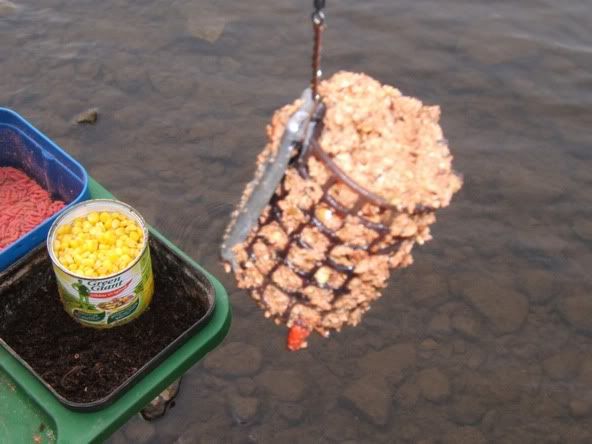
Feeder fishing involves having a capsule of bait attached to your line, which then sinks to the bottom so you are ledgering. On the right the feeder is filled with ground bait. Fishing on the bottom makes good bite indication difficult since there is no float.

One method is to 'feel' the line. I suggest holding the line between your thumb and other four fingers. For this to work the line must be taut. When a fish does take your bait you should feel a tug on the line. This is by the far the most sensitive bite indication.


Another method is to 'quiver tip'. This involves the use of a 'quiver tip' rod or a rod that is quite flexible. Again the line should be taut. When the fish does pull your line the rod tip should move back and forth and hence the name 'quiver tip'.

Tuesday, 2 January 2007

New Fishing TV Series


On January 9th a series of 10 programs called 'Nick Hancock's Fishing School' are starting about budding fly fishermen being shown the ropes in Scottish lochs. It is on at 7.30PM on ITV1.

The TV Presenter invites would-be anglers to the Highlands of Scotland to learn the art of wild game fishing. The environment is stunning but remote and rugged - do they know what they have got themselves into?

Monday, 1 January 2007

The Benefit of Bite Alarms

A bite alarm is a device which indicates visually or by sound that you have a bite. This makes them ideally suitable for fishing where you have more than one rod, such as in Carp or Pike fishing. In these situations bite alarms reduce the pressure on you to monitor all rods at once.

They come in 2 forms. 'Front alarms' (pictured left) are placed on the first rod stick and will sound when the line is moved over them. A bobbin or drop arm is then required to ensure the line is pulled down onto the bite alarm. A post here demonstrates normal requirements of bite alarms.
Rear 'drop off' electronic bite alarms are slightly different. They only sound when the line is pulled off the clip on the drop off arm. They will sound continuously when the line is pulled free.
A recent development in bite alarms is the use of a wireless receiver. Small lights on the receiver will light up when a bite is observed. This is especially useful if you are fishing in a bivvy and might not here the alarms.


Saturday, 30 December 2006

Top Waggler Tips

When waggler fishing I can offer you the following top tips to ease and improve your angling:


  • When fishing shallow strike to the side, the opposite direction to the wind. When fishing deep strike vertically. This should ensure good contact of the hook with the fish.

  • Arrange your shot pattern so that from the bottom, there is progressively a greater distance between the shot. This should reduce tangles.

  • There should be a maximum of one third of your shot between the float and the hook. The rest should be locking the float in place.

  • Try using combinations of bait such as sweetcorn and maggot to target the bigger fish.

  • To remove nuisance fish such as small roach try fishing deeper or using a bigger bait on the hook.

Happy New Year!

Wednesday, 27 December 2006

Fishing Blues


In the winter months the fishing can be slow and there is nothing worse than a downfall of rain to even further ruin the day. I find in these days when your spirits are low it is best to pack up and go home. You're not enjoying it, and if your not getting any bites it is not worth being there!

Personally taking a break from fishing now and again really helps to increase my motivation. Maybe trying out a new tactic, reading the fishing magazines or just trying to fish for a different species.

You could also try fishing a different water. In winter the temperature is lower, and so the fish will dive to the deepest part of the water where it is warmer. In particular deeper waters will provide better sport during the winter months because of the increased temperature deeper in the water.

One fishing aspect that really takes off during winter is pike fishing. These predator are naturally adapted to the cold temperatures and can really provide a thrill during the cold months ahead. Once more techniques for fishing for them are not difficult. You will need big rods, perhaps 2.5 lb test curve, and at least 12 lb breaking strain line. Dead baiting is the simplest of tactics where you attach a dead fish using 2 trebles and a wire trace to your main line. An excellent article on dead baiting can be seen here.

Tuesday, 26 December 2006

Taking Photos When Fishing

Everyone likes to document their progress while fishing, and to take a photo of your latest catch is one of the best ways of doing that. Although to take a really good photo of your latest catch requires some skill.


Try to include in the photo a recognisable object to give a sense of scale. This could be yourself, a ruler whatever you want!


This leads me onto my next point; if you are going to be in the photo, and you are fishing alone, you will need some sort of tripod in which to position your camera while you get ready. Many digital cameras come with a time delay in which you can get ready with the fish before the photo is taken.


Try to make the background of the shot as scenic as possible. This just adds to the beauty of the shot. Personally I find if any interesting weather or season change (red leaves on trees for example) is present this makes an exceptional interesting photo.


Obviously try to keep the time the fish is out of the water at a minimum. There are commercially available keep-nets for carp and pike but again these are not beneficial to the fish.


The use of photo editing software after the photo has been taken can correct errors such as blur or over exposure. A popular free tool to do this is Google's Picasa

Sunday, 24 December 2006

Merry Christmas!

My present to you... a few fishing cartoons